

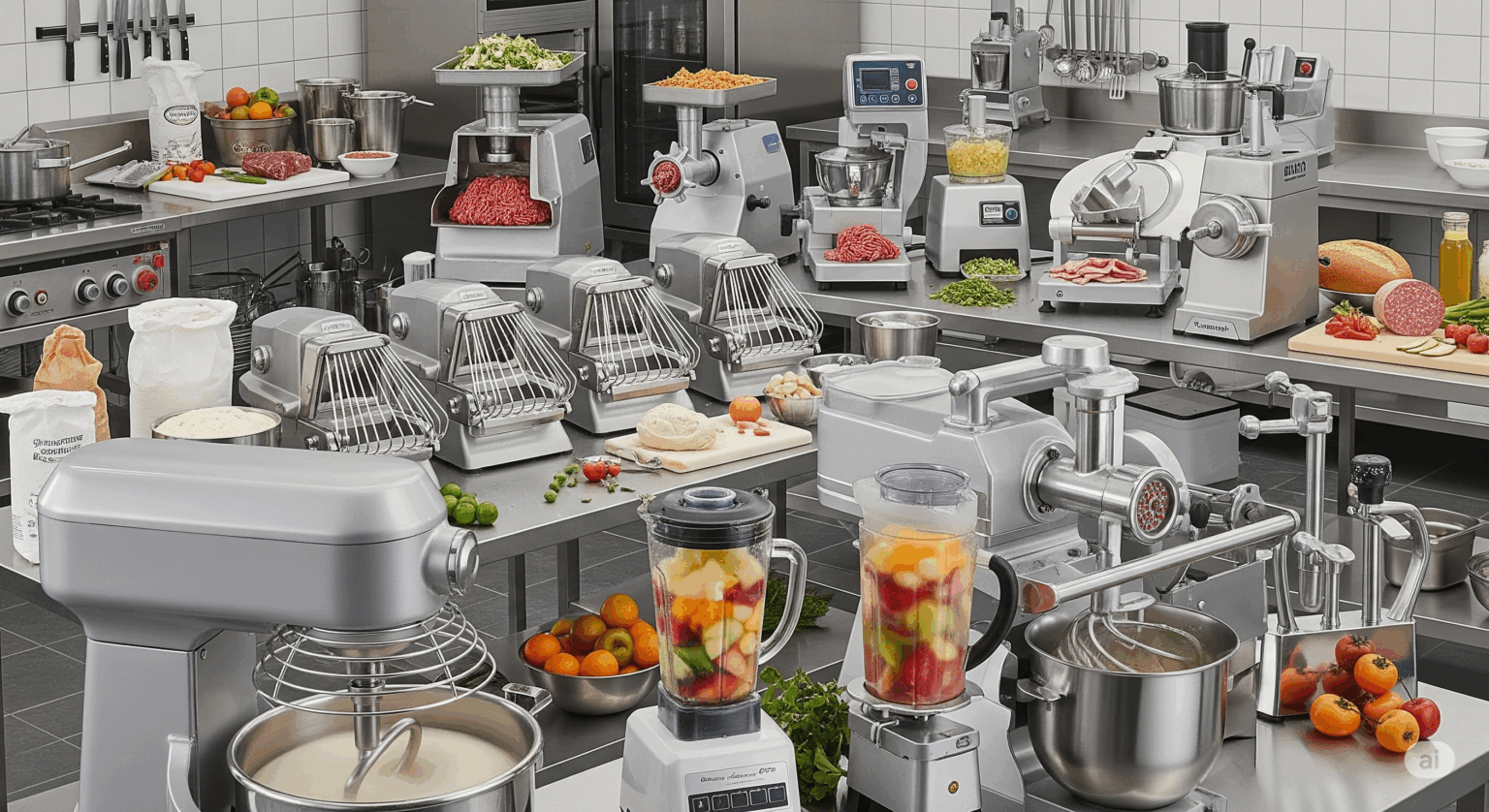
The commercial kitchens rely on organized systems and durable tools. Choosing quality f&b kitchen equipment ensures food safety and cost control in the cooking area.
Cooking equipment
Cooking equipment categorizes into the following:
- ranges
- ovens
- fryers
- grills
- steamers
- induction cooktops
The machines offer high-volume production and continuous use.
For example:
A quick-service restaurant uses a two reliable kitchen equipment, such as:
- heavy-duty gas range
- deep fryer
These are useful to prepare meals during peak hours. The industrial-grade equipment ensures to even out heat distribution and energy efficiency.
Cooking equipment determines:
- output speed
- food quality
It is essential to Invest in high-capacity units for operational consistency.
Quality refrigeration and cold storage
The refrigeration equipment is used for:
- preserving ingredients
- preventing food spoilage
This category of kitchen equipment includes:
- walk-in freezers
- reach-in refrigerators
- blast chillers
- under-counter chillers
Temperature control is a non-negotiable requirement. A proper cold storage complies with food safety standards and reduces waste.
Refrigeration equipment protects inventory and reputation. The cooling systems are the basic requirement in a commercial food operation.
Food preparation equipment
Food preparation equipment reduces manual labor when cooking. It includes:
- mixers
- food processors
- slicers
- grinders
- dough sheeters
The machines help to:
- streamline repetitive tasks
- maintain uniform results
For example:
A bakery relies on a commercial kitchen mixer. It helps them produce consistent dough batches throughout the day. This can save time and ensures product consistency.
Food preparation equipment increases productivity. You can maintain a standardized output. It is an important factor in large-scale food production.
Warewashing and cleaning equipment
The cleaning equipment maintains kitchen hygiene. It supports regulatory compliance as well. This kitchen equipment category includes:
- commercial dishwashers
- glass washers
- sinks
- sanitation stations
Industrial dishwashers handle heavy loads. It maintains high water temperatures for proper sanitation. The labor cost and turnaround time are reduced.
The warewashing equipment protects food safety and operational efficiency. Clean tools and surfaces impact service quality.
Storage and handling equipment
Storage equipment organizes the following:
- ingredients
- tools
- supplies
It includes:
- stainless steel shelving
- food racks
- ingredient bins
- transport carts
Having a proper storage reduces clutter. It improves the workflow. These durable materials are used as they have the strength and corrosion resistance.
Storage and handling equipment enhance organization. It optimizes kitchen movement, contributing to smoother daily operations.
Ventilation and safety equipment
Ventilation systems remove these risks from the kitchen environment:
- heat
- smoke
- grease
What includes in this category are:
- exhaust hoods
- fire suppression systems
- air filtration units
Enough ventilation protects staff comfort and reduces fire risks. The safety systems are required by:
- local regulations
- industry standards
You can comply with workplace protection by having ventilation and safety equipment.
FAQs
Why is commercial kitchen equipment categorized?
Kitchen equipment categorization helps businesses in various aspects, such as:
- plan purchases
- manage budgets
- covered systemic operational needs
How does industrial-grade equipment differ from residential models?
Industrial equipment is built for:
What category should new restaurant owners prioritize?
Cooking and refrigeration equipment are prioritized because they impact food preparation and storage.
How to maintain commercial kitchen equipment?
Provide the routine maintenance that follows:
Providing regular maintenance prevents kitchen equipment breakdowns and ensures compliance.
