

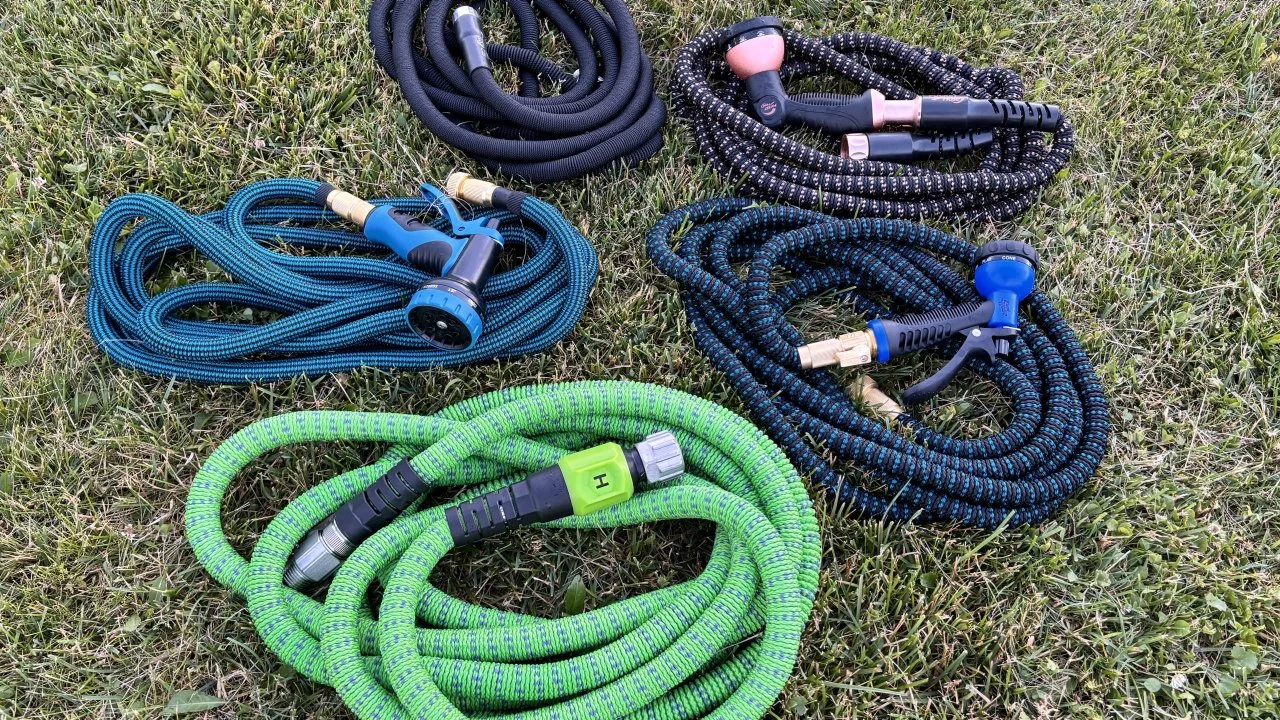
The Best Expandable Garden Hose options include the Flexi Hose Upgraded and the Hospaip 50ft, which are among the most consistently reliable choices at mid-range prices. With triple-layer latex cores, solid brass fittings, and meaningful warranties, either one can outlast three or four cheap alternatives from big-box stores.
Here’s the honest version of what to look for, what to avoid, and which hoses are actually worth your money.
Why People Keep Buying (and Returning) Expandable Hoses
Expandable hoses have a reputation problem – and it’s mostly deserved on the budget end. The concept is sound: a flexible inner tube expands up to 3x its resting length when water flows through, then contracts for easy storage. In practice, the cheap versions fail in predictable ways:
- The outer fabric sleeve tears after a season of UV exposure.
- The inner latex tube develops pinhole leaks or bursts entirely.
- Plastic fittings crack at the connector point – the highest stress area.
- The hose doesn’t contract properly in cold weather and eventually stays stiff.
None of these are inherent flaws of the expandable design. They’re manufacturing shortcuts. Knowing what to look for eliminates 90% of these issues.
What to Actually Look For
| Feature | Why It Matters | Red Flags |
| Inner core layers | 3-layer latex lasts significantly longer than single or double layer | Listings that don’t specify layer count |
| Fitting material | Solid brass fittings resist cracking and corrosion | ‘Metal alloy’ or zinc fittings – code for cheap alloy that corrodes |
| Outer fabric | Double-weave polyester resists UV, abrasion, and snags | Single-layer or thin nylon fabric |
| Burst pressure rating | Look for 150+ PSI rated | No burst pressure listed |
| Warranty | 1 year minimum from a company with actual customer service | No warranty or 30-day only |
| Nozzle included | Quality brass nozzle vs cheap plastic one | Plastic nozzles strip threads within months |
Top Expandable Garden Hoses Ranked
| Brand / Model | Length | Core | Fittings | Warranty | Price |
| Flexi Hose Upgraded | 25-100ft | 3-layer latex | 3/4″ brass | Lifetime | ~$25-50 |
| Hospaip Expandable | 25-100ft | 3-layer latex | 3/4″ brass | 1 year | ~$20-40 |
| Bionic Steel Pro | 50-100ft | Stainless steel | Stainless | Lifetime | ~$50-80 |
| GrowGreen Heavy Duty | 50-100ft | 3-layer latex | Brass | 1 year | ~$25-45 |
| Titan Technologies | 50-75ft | 3-layer latex | Solid brass | 2 years | ~$35-55 |
| Pocket Hose (Tripling) | 50-100ft | Double latex | Plastic | Limited | ~$15-25 |
Best Overall: Flexi Hose Upgraded
The Flexi Hose earns the top spot because of two things that matter more than anything else: the triple-layer latex core and the lifetime warranty from a company that actually honors it. The fittings are solid 3/4″ brass – not pot metal, not ABS plastic – and the outer fabric is double-weave polyester that survives being dragged across gravel and left out in summer heat.
It expands to full length within about 30-45 seconds of water flow and contracts back to roughly 1/3 of its extended length when drained. Easy enough to store in a bucket or hang on a hook without coiling.
Best Heavy-Duty Option: Bionic Steel Pro
If you’ve burned through multiple expandable hoses and want something genuinely different, the Bionic Steel Pro replaces latex entirely with a flexible stainless steel core. It won’t burst, won’t develop pinhole leaks, and isn’t vulnerable to sun degradation the way latex is.
It’s heavier than latex-core hoses and doesn’t contract as tightly, but for serious gardeners, landscapers, or anyone using the hose daily, the tradeoff is worth it.
Best for Small Gardens: Hospaip 25ft or 50ft
Not everyone needs 75 or 100 feet of hose. The Hospaip in a 25 or 50ft length keeps storage simple, weighs almost nothing, and delivers the same triple-layer construction as the larger versions. If your garden is a patio, balcony, or small yard, this is the sensible size – a 100ft hose contracted to 33ft still takes up more space than it needs to.
What the Cheap Ones Get Wrong
A $12 expandable hose from a discount retailer will typically have: single-layer latex (bursts within one season), ABS plastic fittings (strip or crack at the thread), thin single-weave nylon sleeve (tears on rough surfaces), and no real warranty. The savings are illusory – you’ll buy two or three before a decent hose would have paid for itself.
The price floor for a hose worth buying: roughly $25 for a 50ft model from a brand with actual customer service.
Care Tips to Make Them Last
- Drain completely after each use. Water left inside breaks down the latex faster and promotes mold in the inner tube.
- Store out of direct sunlight. UV degrades latex and most outer sleeve materials significantly.
- Don’t drag over sharp edges – concrete curbs, gravel, exposed nails. The outer sleeve takes the abuse.
- Don’t leave connected and pressurized for extended periods when not in use. The static pressure stresses the inner tube.
- In winter, drain and store indoors. Frozen water inside an expandable hose destroys it.
Expandable vs Regular Garden Hose
| Feature | Expandable Hose | Traditional Rubber/Vinyl Hose |
| Weight (when drained) | Very light – 1-2 lbs | Heavy – 5-15 lbs for 50ft |
| Storage | Compact – contracts to 1/3 length | Bulky – requires coiling and reel |
| Durability | Good (quality models) / Poor (cheap models) | Excellent – 10+ years for quality rubber |
| Kinking | Doesn’t kink – design advantage | Prone to kinking, especially in heat |
| Price (quality tier) | Comparable | Comparable to similar quality |
| Cold weather | Degrades faster in freezing temps | Handles cold better; needs draining |
For most home gardeners who want something lightweight and easy to store, a quality expandable hose is the better choice. For heavy-duty irrigation, professional use, or extremely hot/cold climates, a traditional rubber hose is more forgiving over the long term.
