

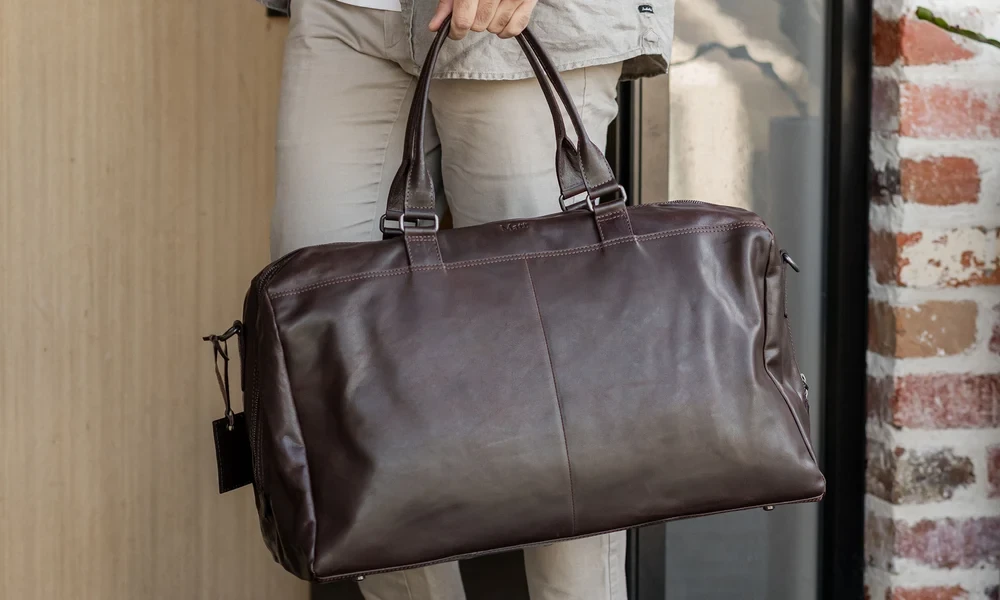
A woman steps off a crowded bus with a coffee in one hand and her bag in the other. At the office door, she has to set one of them down to open it. Small moments like this happen many times a day, and they show something easy to forget, a bag carried by its handle keeps one hand busy.
That is why choosing among top handle bags (手提包) should start with daily routine, not looks alone. How much needs to be carried, how far, and how often the hands must be free all shape which bag will truly work. Style still matters, but a bag that fits the day is the one that gets used.
One Hand Is Always Busy
A shoulder bag or cross-body bag can be forgotten for hours. A top handle bag cannot. It sits in the hand or hangs from the crook of the arm, always present, always noticed.
This has clear upsides:
- It looks polished. A bag held by its handle has a neat, upright look that suits work and formal settings.
- It keeps contents close. The bag stays in view and within reach.
- It holds its shape. Many handheld styles have a firm structure that keeps them looking smart.
It also has limits:
- Hands are not free. Phones, coffee cups and umbrellas compete for space.
- Weight is felt more. A heavy bag held in one hand tires the arm quickly.
- Long walks are harder. Carrying by hand suits short distances better than long ones.
For this reason, many top handle bags now come with an extra strap. The strap can be added for shoulder or cross-body wear and removed when a cleaner, handheld look is wanted.
Three Routines, Three Bags
The right bag depends on the shape of a person’s day. Three common routines show how:
- The office commuter. She carries a laptop, a notebook, a wallet and a phone. A roomy, structured tote with sturdy handles suits her, ideally with a strap for the commute.
- The meeting-hopper. He moves from room to room with only essentials. A medium handheld bag with a clean shape looks sharp on a table and holds just enough.
- The evening guest. She needs a phone, keys and a lipstick. A small top handle bag, perhaps with a chain strap, adds polish without bulk.
Each person needs something different from the same type of bag. The routine decides the size, shape and features.
Size and Space, What Fits Inside
Picking the right size avoids a bag that bulges or one that swallows small items. This guide matches common sizes of top handle bags (手提包) to daily needs:
| Size | Typically Holds | Best For |
|---|---|---|
| Mini | Phone, cards, keys, lipstick | Evenings and light days |
| Small | The above plus a small wallet and glasses | Errands and casual outings |
| Medium | The above plus a small notebook or tablet | Office days and meetings |
| Large | The above plus a laptop, papers and extras | Long workdays and short trips |
A medium bag is often the most useful single choice. It holds a full day’s basics without feeling heavy in the hand.
The Bag That Earns Its Place
A handheld bag asks something of its owner, a free hand, a little attention, and a bit of care at the end of the day. In return, it gives a sense of order and polish that few other bags match. The best one is not always the most eye-catching in the shop. It is the one sized for the real day, made in a material that suits the routine, and comfortable enough in the hand to be picked up again tomorrow.
